
'When negotiators meet next, they may like to bring new issues to the table.'

'Pakistan is an ally who gives the US access.' 'If we have a presence there, it puts us that much closer to China and puts our assets closer to China and Iran.'

The steep 50 per cent tariffs imposed by the United States on Indian goods are largely a result of President Donald Trump's 'personal pique' at not being allowed to mediate in the India-Pakistan conflict, according to a recent report by American multinational investment bank and financial services company Jefferies.

Even as Russia and West Asia have been slugging it out for market share in India to sell their crude oil, the US is quietly making its moves on the sidelines. The US has doubled its share of the Indian crude market in the past few months, according to industry sources and ship-tracking data. Some of the increase in America's market share may have come at the expense of Russia, India's biggest crude oil supplier, said industry sources.

Who else will take on the might of Microsoft, Google, and Amazon if not the Adanis, Ambanis, Birlas, or Tatas?, asks R Jagannathan.

'Given the lag in transmission, further softening of lending rates may happen in the coming months.'
India is deeply concerned over the spike in the price of oil due to the Russia-Ukraine conflict and it is "breaking our back," External Affairs Minister S Jaishankar has said. Addressing a joint press conference with US Secretary of State Antony Blinken after holding bilateral talks, Jaishankar on Tuesday said there is a very deep concern among developing countries about how their energy needs are addressed. Speaking about the Ukraine war, he said: "We have taken the position privately, publicly, confidentially and consistently that this conflict is not in anybody's interest."

Communication channels between India and the US are open to resolve the ongoing tariff issues, and the glitch in trade ties is only temporary, given the long-term relationship between the two nations, government sources said on Wednesday. The US' 50 per cent tariffs on Indian exports to America came into effect from August 27, barring a few sectors.
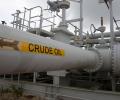
Indian imports of Russian oil plunged by a record in August month-on-month (M-o-M) as discounts on the fuel shrank in tandem with rising Brent oil prices. Higher crude prices will drive inflation or hurt earnings at oil companies and India's fiscal position if such spikes are not passed on to consumers. Indian purchases of Russian crude declined by around 24 per cent in August from July to the lowest level since January, with refiners expecting volumes to drop further amid rising rates of Russian benchmark Urals grade, substantial stocks at refiners, and planned maintenance at Indian refineries, according to ship tracking data and industry officials.
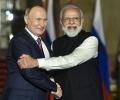
Russian President Vladimir Putin will travel to India in December, Kremlin foreign policy aide Yuri Ushakov said. Putin will meet Prime Minister Narendra Modi on the sidelines of the Shanghai Cooperation Organisation (SCO) Summit in China's Tianjin city to discuss the preparations for his visit to India.

Russia has welcomed India's decision to not support the price cap on Russian oil announced by G7 and its allies and offered it cooperation on leasing and building large-capacity ships to overcome the ban on insurance services and tanker chartering in the European Union and Britain to continue buying discounted oil. The offer came as Russian Deputy Prime Minister Alexander Novak held a meeting with the Indian Ambassador to Moscow, Pavan Kapoor, on Friday. "The Deputy Prime Minister welcomed India's decision not to support the price cap on Russian oil, which was imposed on December 5 by the G7 countries and their allies," the Russian foreign ministry said in a statement.
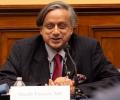
Senior Congress leader Shashi Tharoor says US tariffs are negatively impacting India, leading to job losses, and criticizes President Trump's diplomatic behavior.

India and Russia always stood "shoulder-to-shoulder" even in the most difficult situations, Prime Minister Narendra Modi told Russian President Vladimir Putin on Monday, against the backdrop of possibly the worst phase in New Delhi's ties with the US in over two decades.
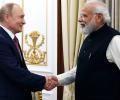
Russian President Vladimir Putin is expected to visit India around December 5 to hold annual summit talks with Prime Minister Narendra Modi to further solidify bilateral strategic ties.

The 25 per cent US tariffs, plus a penalty for Russian imports, could dent India's GDP growth by 30 basis points in the current fiscal, but the higher duty is unlikely to significantly affect India's domestic demand-driven economy, Barclays said on Thursday. If the 25 per cent tariff, announced by US President Donald Trump on Wednesday, is implemented from August 1, the effective average US import tariff on Indian goods will rise to 20.6 per cent in trade-weighted terms, as per Barclays estimates.
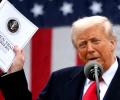
The additional 25 per cent duty will come into effect after 21 days or August 27.
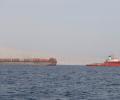
US strikes on Iran's three main nuclear facilities have once again raised concerns that Tehran might shut down the Strait of Hormuz - one of the world's most critical chokepoints, through which a fifth of global oil and gas supply flows.

The country's imports from Russia almost doubled to $25.69 billion during the April-August period this fiscal due to increasing inbound shipments of crude oil and fertiliser, according to the commerce ministry data. With this, Russia has become India's second-largest import source during the first five months of this fiscal. The imports were $13.77 billion during April-August 2022.
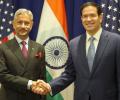
Rubio voiced "appreciation" for New Delhi's continued engagement on bilateral issues, including trade, defence and energy.

'While the President has been critical of India, he has gone out of his way to compliment PM Modi. They have an incredible relationship.'
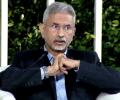
On President Putin's two-day trip to India, Jaishankar said for a "big" and "rising" country like India, it is important to maintain good cooperation with as many important players as possible in the world in line with freedom of choice.
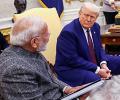
To those who ask, "Is all this really worth it? Why can't domestic demand fill the gap?", it is important to remind them that only 13 economies since the Second World War have grown at 7 per cent or more for 25 years -- like India needs to. They all had one thing in common: Strong export growth underpinned by strong global engagement, explains Sajjid Z Chinoy.
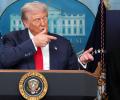
In trade negotiations, as in chess, sometimes you need to accept a temporary disadvantage to secure a better long-term position, points out Sonal Varma, chief economist (India and Asia ex-Japan) at Nomura.

The commerce ministry on Tuesday said the discussions with visiting US Chief Negotiator Brendan Lynch on the proposed bilateral trade agreement were positive and forward looking.

India, the biggest contributor to world demand for oil, will bring into effect in an overhaul of its drilling policy. This comes after more than a year of preparation and will boost the exploration and development of India's oil and gas sector along with increased participation by foreign drillers

Among Sensex firms, Tech Mahindra, HCL Tech, Eternal, Axis Bank, Maruti, Tata Steel, HDFC Bank and Asian Paints were the gainers. However, Adani Ports, Trent, Tata Motors, Hindustan Unilever and NTPC were among the laggards.
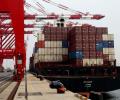
On the back of rising crude oil purchases, India's bill for imports from sanctions-hit Russia jumped 3.5 times in a year in April to $2.3 billion, showed data from the commerce ministry. In April, India's crude oil imports from Russia were valued at $1.3 billion, 57 per cent of India's total inbound shipments from Russia. Other major imported items during the month included coal, soybean and sunflower oil, fertilisers, and non-industrial diamonds. That month, Russia was also the fourth-largest crude petroleum supplier to India, after Iraq, Saudi Arabia, and the United Arab Emirates (UAE).
India's imports from Russia rose 64 per cent to $36.27 billion during the April-October period this fiscal on higher shipments of crude oil and fertiliser, according to the commerce ministry data. With this, Russia has become India's second-largest import source during the first seven months of this fiscal. The imports were $22.13 billion during April-October 2022.

Ukraine's Ambassador to India Oleksandr Polishchuk asserted that Kyiv "will not give up and will not accept any territorial concessions" amid the ongoing Russia-Ukraine war. He also suggested Moscow has benefitted from trading with New Delhi.
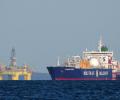
Russian oil supplies to India will continue to flow unhindered and suppliers will come up with ways to sidestep secondary sanctions, a Russian official told Business Standard.
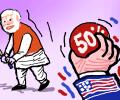
'Things may get much worse before they get better,' predicts Ajay Chhibber.
India's imports from Russia rose by about 67 per cent to $30.42 billion during the April-September period this fiscal on higher shipments of crude oil and fertiliser, according to the commerce ministry data. With this, Russia has become India's second-largest import source during the first half of this fiscal. The imports were $18.24 billion during April-September 2022.

China's ruling Communist Party is holding its annual leadership conclave to discuss the new five-year plan, the impact of US President Donald Trump's tariff war, and the ongoing anti-corruption crackdown in the military.

India has implemented a number of free trade agreements with developed nations and is in active dialogue for such pacts with nations including the US, Oman, and the EU, Commerce and Industry Minister Piyush Goyal said. India has implemented trade pacts with Australia, the UAE and EFTA bloc. It has also signed an agreement with the UK.

Prime Minister Narendra Modi accused the Congress party of supporting terrorists groomed by Pakistan and protecting infiltrators during a rally in Assam. He also highlighted development projects undertaken by the BJP government in the state.

India has become Apple's main export hub to the US, which consumes over $40 billion worth of iPhones annually.

India's export of fuels like diesel to the European Union jumped 58 per cent in the first three quarters of 2024, with a bulk of them likely coming from refining discounted Russian oil, according to a monthly tracker report. The EU/G7 countries in December 2022 introduced a price cap and an embargo on the imports of Russian crude oil in a bid to cripple Kremlin's revenue and create a vacuum in its funding for the invasion of Ukraine.
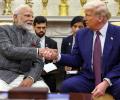
'India's farmers will be unable to compete with the US, given the subsidies that the latter provides its farmers.'

Russian oil giant PJSC Rosneft Oil Company is in early talks with Reliance Industries for sale of its 49.13 per cent stake in Nayara Energy, which operates a 20-million tonnes-a-year oil refinery and 6,750 petrol pumps in India, sources said. Reliance has held preliminary talks for acquisition of Nayara, which will help it overtake state-owned Indian Oil Corporation (IOC) to become India's No.1 oil refiner as well as give a meaningful presence in the fuel marketing space.

From labelling India the 'Tariff King' to slapping sweeping import duties, US President Donald Trump has steadily hardened his trade stance on India. These announcements are being seen as a pressure tactic to get New Delhi to agree to demands made by the US in the proposed Bilateral Trade Agreement (BTA).
 © 2026 Rediff.com - Advertise with us - Disclaimer - Privacy Policy - Sitemap - Feedback - About us - Terms of use - Grievances